
How we work

A project with clear stages and decisions.

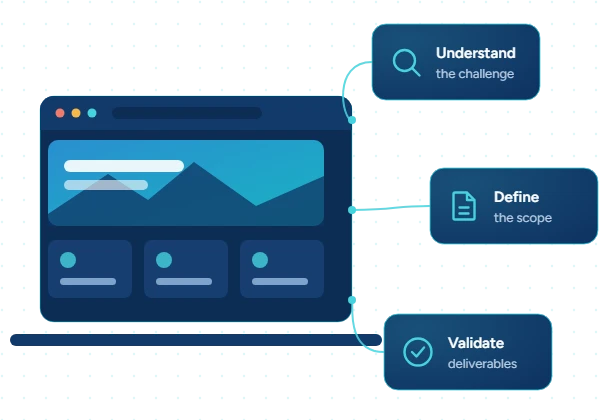
We start by understanding your business. We define the scope, develop the solution and validate deliverables with you.

Our approach

An approach tailored to the project.

A website, an online store and an integration have different needs. We analyse objectives, existing tools and available resources to propose a suitable way of working.

The proposal identifies what will be developed, deliverables, approval points and investment. The stages below are a reference: their application depends on each project’s size and scope.

Our stages

From first contact to delivery

We support the project through agreed stages. Decisions and approvals help confirm what is ready and what needs adjusting.

  1. Understand the challenge

    We gather objectives, user needs and information about current operations. We identify what should change and the elements needed for analysis.

  2. Define the scope

    We propose the approach, deliverables, responsibilities and investment. We agree the schedule, dependencies and approval criteria before execution.

  3. Prepare and develop

    We organise content and requirements. We create the design, develop or configure the solution and prepare the specified integrations. We present deliverables at the agreed points.

  4. Test and validate

    We check functions covered by the project and present the solution for approval. We record corrections and confirm the agreed criteria before use begins.

  5. Deliver and put into use

    We prepare publication or activation of the solution according to the approved plan. We deliver the specified materials and guidance and confirm the access needed for use.

  6. Support and develop

    Where ongoing support is part of the service, we review operation and agreed indicators. Improvements, maintenance and new features have defined scope and terms.

Effective collaboration

The project progresses through collaboration between both parties.

We define points of contact and communication milestones. Responses, content and approvals form part of the work plan.

What we provide

  • A proposal with identified scope, deliverables and terms.
  • Execution of the contracted work and presentation of the specified deliverables.
  • Identification of the elements we need to receive to proceed.
  • A record of adjustments and decisions at approval points.

What we need from your team

  • A point of contact to bring together your company’s decisions and responses.
  • Content, information and authorised access at the agreed times.
  • Approval of deliverables according to the defined criteria.
  • Communication of changes to project priorities or requirements.

Missing content, access or approvals may require the schedule to be revised. New needs are assessed before the scope changes.

What we define

What is defined before we start

Scope and deliverables

Included work, materials to be delivered and exclusions. Revisions, formats and editable elements are set out in the proposal.

Schedule and approvals

The work sequence, dependencies and approval points. Dates also depend on the elements and responses needed for the project.

Investment and external services

Implementation costs and payment terms. Licences, subscriptions, hosting and other external services are identified where required.

Maintenance and support

Post-delivery services, assistance channels and response terms. Ongoing support depends on the service contracted.

Terms are set out in the proposal. New needs receive their own assessment.

From delivery to impact

Validate the solution and evaluate results.

Before work begins, we define what should work and how it will be checked. Where there are improvement objectives, we also agree indicators and how comparisons will be made.

Agreed tests

We select functions and journeys relevant to the project. Tests, the data used and those responsible for validation are identified.

Launch and adoption

We confirm publication or activation conditions, access and the guidance required. Where the project requires it, we agree transition and recovery procedures.

Useful indicators

We can track time per task, errors, solution usage or enquiries received. Each indicator needs a suitable data source and comparison period.

For automation and AI, we assess response quality, exceptions and the human review required. Functional testing and business improvement are different assessments; results are not guaranteed.

Explore digital consultancy and transformation

Frequently asked questions

Before you start

Do we need a complete brief?

No. We can start with your objectives and the difficulties you want to resolve. The initial analysis identifies the information required and the work to define in the proposal.

How long does a project take?

It depends on scope, integrations, content and approvals. The schedule is defined in the proposal and may be revised if requirements or execution conditions change.

How are stages approved?

We agree approval points and criteria. Your company appoints the responsible point of contact; decisions and adjustments required are recorded before the next stage.

Can the scope be changed?

Yes. We assess how the change affects deliverables, timescale and investment. Additional work depends on approval of the corresponding terms.

Does delivery include maintenance and support?

It depends on the proposal. Delivery, initial guidance and ongoing support have distinct scopes. We identify included services and assistance terms.

How do you evaluate automation and AI projects?

We start with the process and available data. We define tests, indicators and the human review required. Where appropriate and contracted, a pilot allows the solution to be assessed before wider use.

Which project would you like to bring to life?

Tell us about your challenge. We help define the next step.

Cookie preferences

Choose the optional categories you allow. You can change your preferences at any time with Manage cookies.